As the calendar turns, most litigation firms are caught in the “year-end hurricane”—juggling trial dates, client expectations, and a deluge of final deadlines. In this environment, “vendor spend” often feels like a back-office footnote, something to be glanced at and approved without much thought.
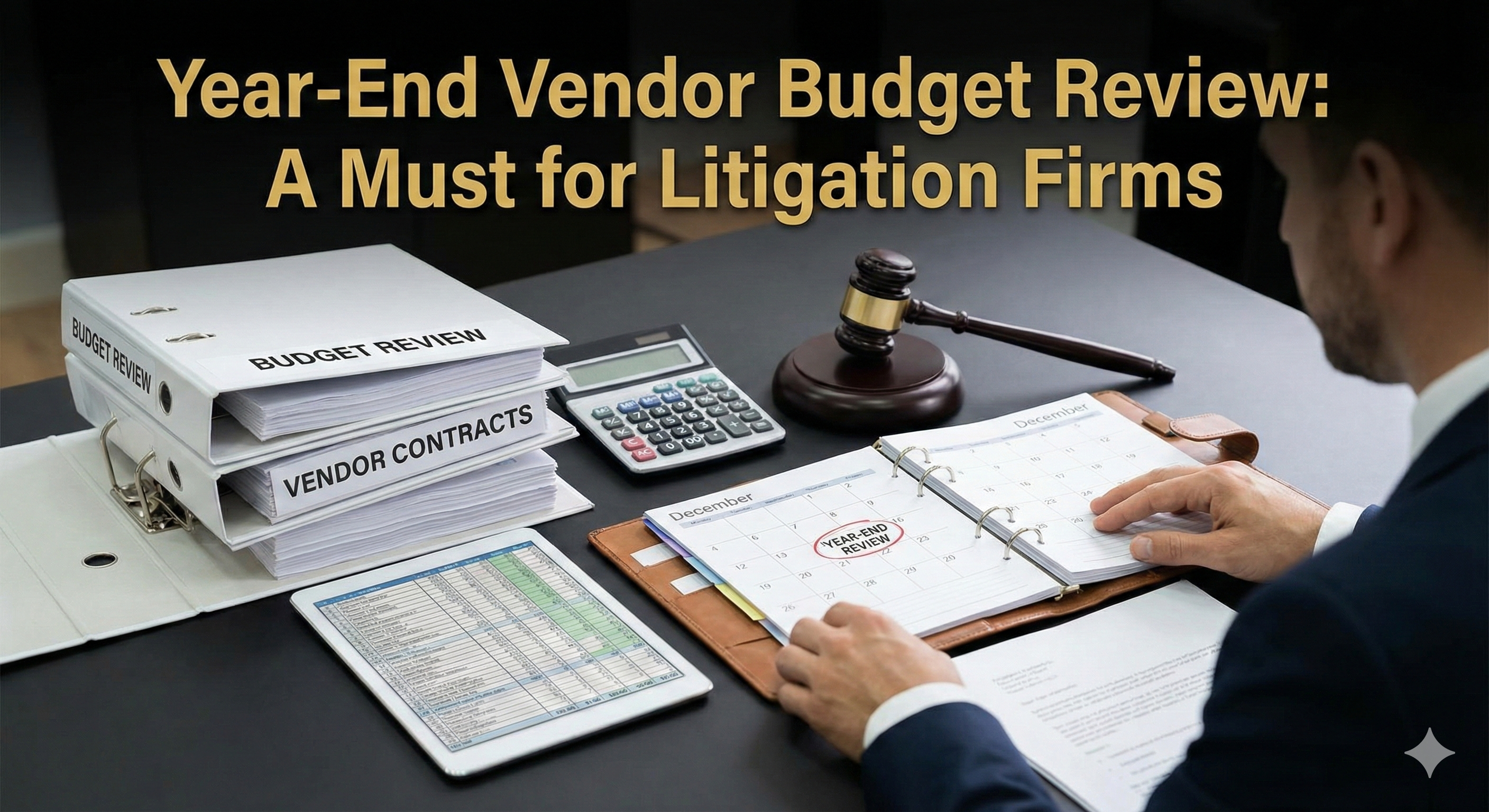
However, at Legal Document Server, we’ve learned that the “machinery” of your firm—the service of process, eFiling, and records retrieval—is exactly where your profitability is either fortified or eroded. A year-end audit isn’t just about cutting costs; it’s about ensuring your firm enters 2026 with a high-performance support infrastructure.
The “Invisible” Costs: Beyond the Invoice Most firms don’t overspend because they are careless; they overspend because litigation support costs hide in plain sight, scattered across different matters and offices. The real cost of a vendor isn’t just the line item on a bill. It’s the “friction tax” your staff pays every day:
The Tracking Tax: Your paralegals spending hours chasing status updates.
The Rejection Tax: Inaccurate eFiling that leads to last-minute scrambles and missed windows.
The Risk Tax: Defective service of process that invites unnecessary motion practice and delays.
In litigation, you aren’t buying a commodity; you are buying certainty. If your team is “babysitting” your vendors, you are paying for that service twice—once in the invoice, and once in lost opportunity cost and payroll.
The 2025 Audit Framework: What to Look For To move from a “vendor patchwork” to a streamlined partnership, we recommend evaluating your 2025 data through three specific lenses:
Billing Clarity vs. “Add-on” Culture: Look for unbundled fees like mileage, wait times, or “administrative” surcharges. If your invoices are a puzzle of hidden costs, your case management efficiency is likely suffering.
The “Rush” Frequency: Analyze how often you paid for emergency court runs. If “rush” has become your routine, your vendor isn’t helping you stay ahead of the curve—they are reacting to your chaos.
Documentation Integrity: Does your provider produce “litigation-grade” work? Your subpoenas and affidavits must be bulletproof. A cheap provider who produces sloppy paperwork is the most expensive choice you can make when a judge starts asking questions.
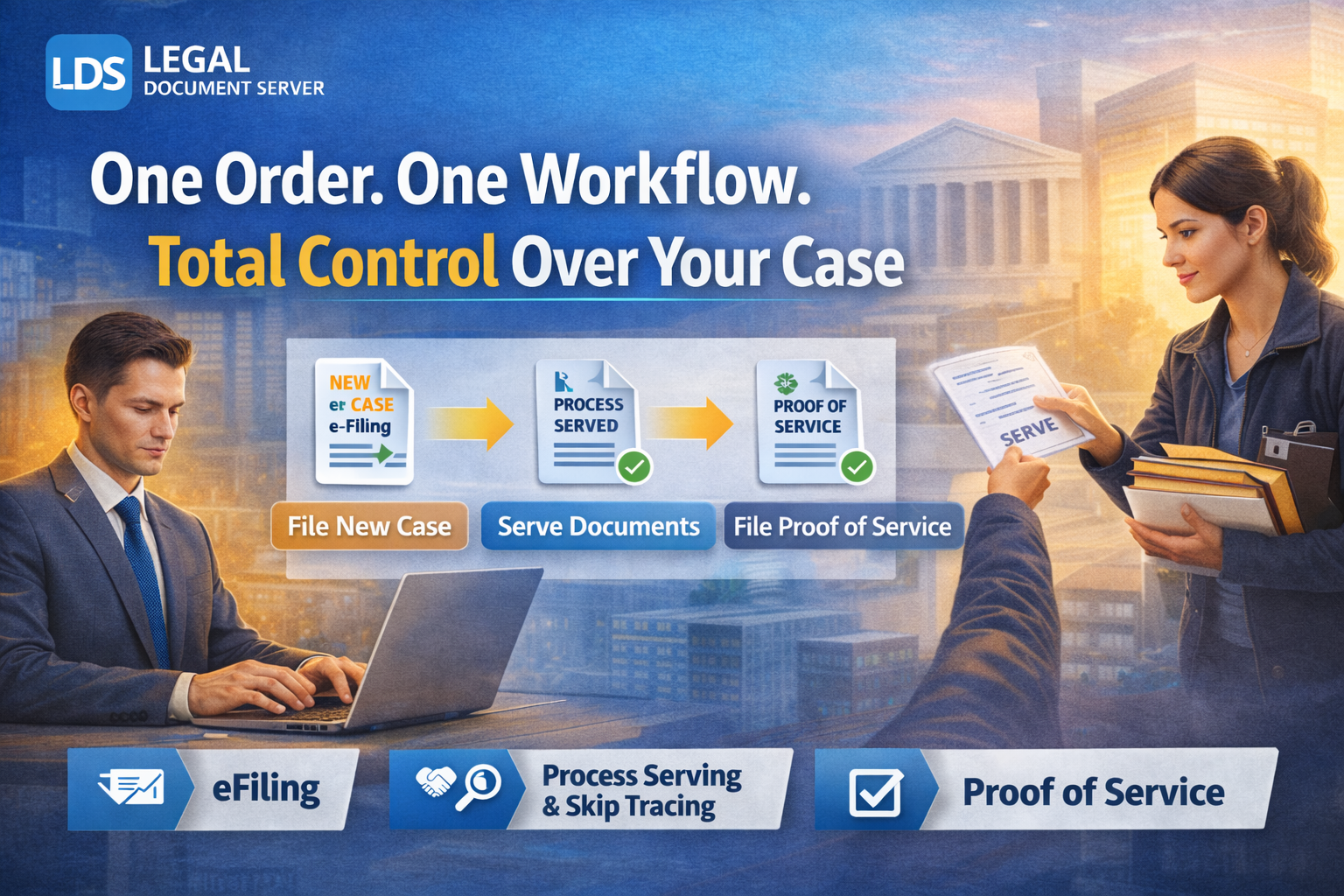
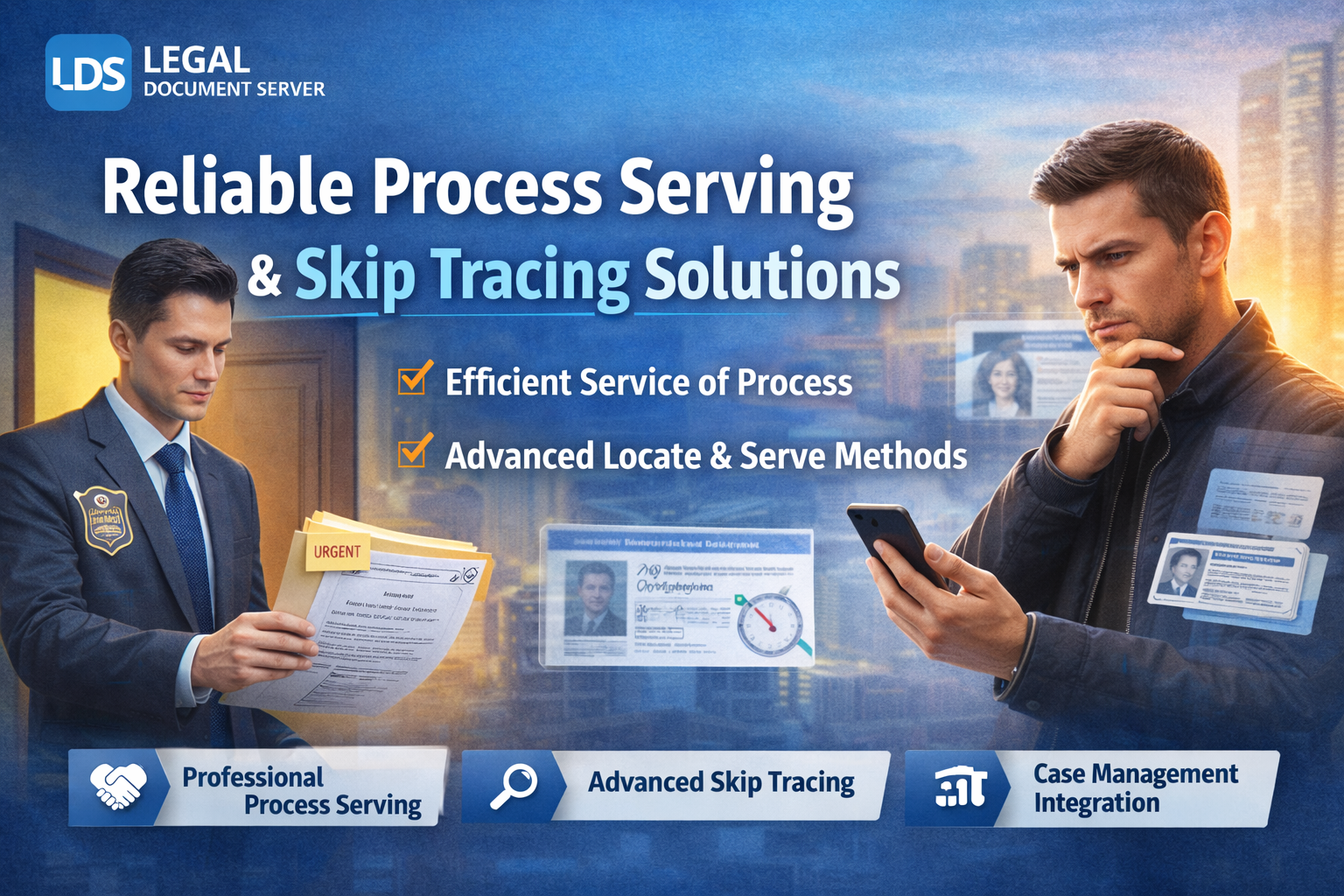
Moving Toward a “True Partner” Model in 2026 The goal of your year-end review is to identify where you can consolidate. A true litigation support partner should offer a “lifecycle” approach—handling everything from skip tracing to conformed copies under one roof. This reduces the points of failure and gives you a single, accountable point of contact.
At Legal Document Server, we’ve built our model on this exact philosophy: operational discipline and transparent pricing. We don’t just “do the job”; we protect your deadlines and your reputation.
Your Year-End Action Plan Before the Q1 rush hits, take one week to run this checklist:
Identify the top 3 cost drivers: Where is the volume highest?
Mark the “Friction Costs”: Which vendors required the most follow-up from your staff?
Consolidate: Choose a partner that meets your standards, not just your budget line.
The firms that take this audit seriously don’t just spend less—they spend smarter. They enter the new year with cleaner workflows, faster turnarounds, and the ability to focus on what they do best: litigating.